
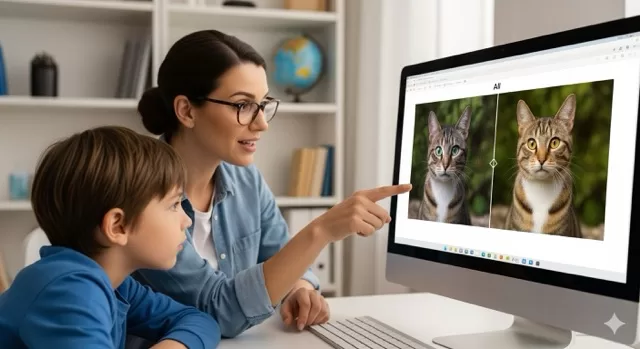
Artificial intelligence is changing the way we live, work, and communicate. But along with its benefits, AI also brings risks — especially the rise of AI-generated “fakes” such as photos, videos, and even voice recordings that look or sound real but are completely fabricated. For families, this new digital landscape can be confusing and even dangerous if kids or adults mistake fakes for the truth.
This guide breaks down the basics in simple, family-friendly terms so parents, students, and everyday internet users can stay safe.
What Are AI-Generated Fakes?
AI can now create highly realistic images, videos, and audio clips. These are often called:
- Deepfakes – manipulated videos that can make someone appear to say or do something they never did.
- AI images – computer-generated pictures that look like photos but are artificial.
- Synthetic voices – audio clips that mimic someone’s speech.
While these technologies can be fun or creative, they can also be misused to spread misinformation, scams, or inappropriate content.
Why Families Should Care
- Kids and teens are especially vulnerable to believing fake content shared on TikTok, YouTube, or Instagram.
- Scammers may use fake voices or images to trick people into giving away money or private information.
- Trust in real photos, videos, and even schoolwork can be damaged if we don’t learn how to tell real from fake.
How to Spot AI-Generated Fakes
Here are some easy-to-remember tips for the whole family:
- Look closely at details
- AI often struggles with hands, teeth, and backgrounds. Look for blurry edges, extra fingers, or warped objects.
- Check the source
- If a shocking photo or video is only shared on social media, it might be fake. Reliable news sites usually verify first.
- Pause and listen
- With fake voices, notice if the speech sounds too flat, robotic, or has unnatural pauses.
- Reverse image search
- Parents can teach kids how to use Google Images or other tools to see where a photo originally came from.
- Trust your instincts
- If something looks “off” or too good to be true, take a step back before sharing or believing it.
Teaching Kids About AI Fakes
- Have open conversations – explain in simple terms that “not everything online is real.”
- Practice together – look at examples of AI images and point out flaws as a family activity.
- Encourage questions – let kids bring you content they’re unsure about.
- Set rules – discourage sharing content unless it comes from a trusted source.
Balance Awareness With Confidence
It’s important not to scare children or make them distrust everything online. Instead, teach them to be curious investigators — asking questions, looking for proof, and knowing when to double-check before believing or sharing something.
SafeTechGuide
AI technology is here to stay, but with awareness and a few simple habits, families can navigate the online world with confidence. By working together and staying alert, parents and kids can spot AI-generated fakes and protect themselves from misinformation or scams.
Leave a Reply
You must be logged in to post a comment.