When Personal Data Isn’t Private: The App Privacy Crisis
In today’s always-connected world, apps hold some of our most sensitive information—from health and fitness data to dating preferences and personal conversations. Yet recent breaches and mishandling of user data remind us of a hard truth: not every developer takes data protection seriously.
Take, for instance, incidents involving apps like Tea Dating Advice and the popular women’s health app Flo. Both were found to have mishandled or exposed private user information—including intimate health details and conversations that users believed were safe. For women especially, such breaches can pose serious risks, ranging from harassment and stalking to broader concerns around personal safety.
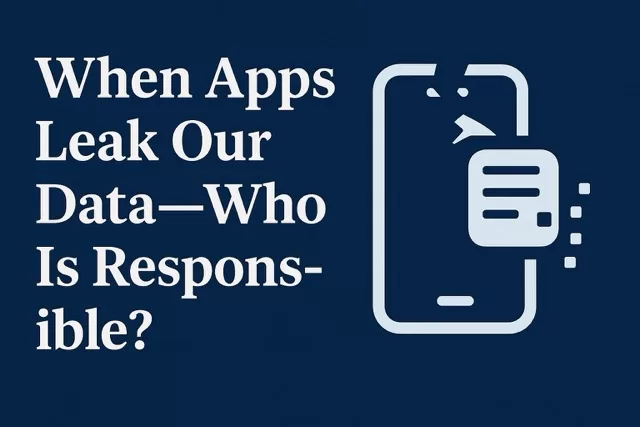
So, when apps leak our data—who should be held accountable?
The Accountability Puzzle
1. Developers’ Responsibility
App creators are the first line of defense when it comes to safeguarding user data. At minimum, developers should:
- Build apps with privacy by design—encrypting sensitive data from the start.
- Be transparent about what data is collected, stored, and shared.
- Implement regular security audits and patch vulnerabilities promptly.
Unfortunately, many app developers rush products to market, prioritizing features and growth over robust security measures.
2. Platform Oversight
App stores like Apple’s App Store and Google Play set policies for apps but often fail to enforce them strictly. While both companies have increased privacy checks in recent years, questionable apps still slip through. Stronger oversight and independent third-party audits could reduce risks.
3. Regulatory Gaps
Data privacy laws exist—but they vary widely by region.
- In the U.S., protections are fragmented, with no single federal law covering app data privacy comprehensively.
- In the EU, the GDPR gives users stronger rights, but enforcement is uneven and often slow.
- Many countries lack clear penalties for apps that mishandle user data.
This leaves many users in a gray zone, where accountability is blurred and companies face little consequence for negligence.
Why It Hits Women Hardest
Apps like Flo and Tea Dating Advice disproportionately affect women seeking safety, health guidance, or community support. When their private information is leaked, the consequences can be far more severe than spam emails or targeted ads. Women may face:
- Stigma from leaked health or relationship details.
- Harassment or stalking if location or personal identifiers are exposed.
- Loss of trust in digital platforms meant to empower and protect them.
Who Should Protect Us?
The answer is: everyone involved.
- Developers must treat user data as sacred, not a monetizable afterthought.
- Platforms need stricter vetting of apps and ongoing monitoring.
- Lawmakers must close regulatory gaps and hold companies accountable with meaningful fines and penalties.
- Users can protect themselves by checking app permissions, reading privacy policies (even if tedious), and limiting what sensitive data they share.
SafeTechGuide
When apps leak our data, the damage extends far beyond technical breaches. It impacts safety, trust, and the fundamental right to privacy. Responsibility doesn’t fall on just one group—it’s shared across developers, platforms, and regulators.
Until accountability becomes the standard, every user should remain cautious about what they share, who they share it with, and which apps they trust.
👉 Stay informed, stay secure. For more digital safety insights